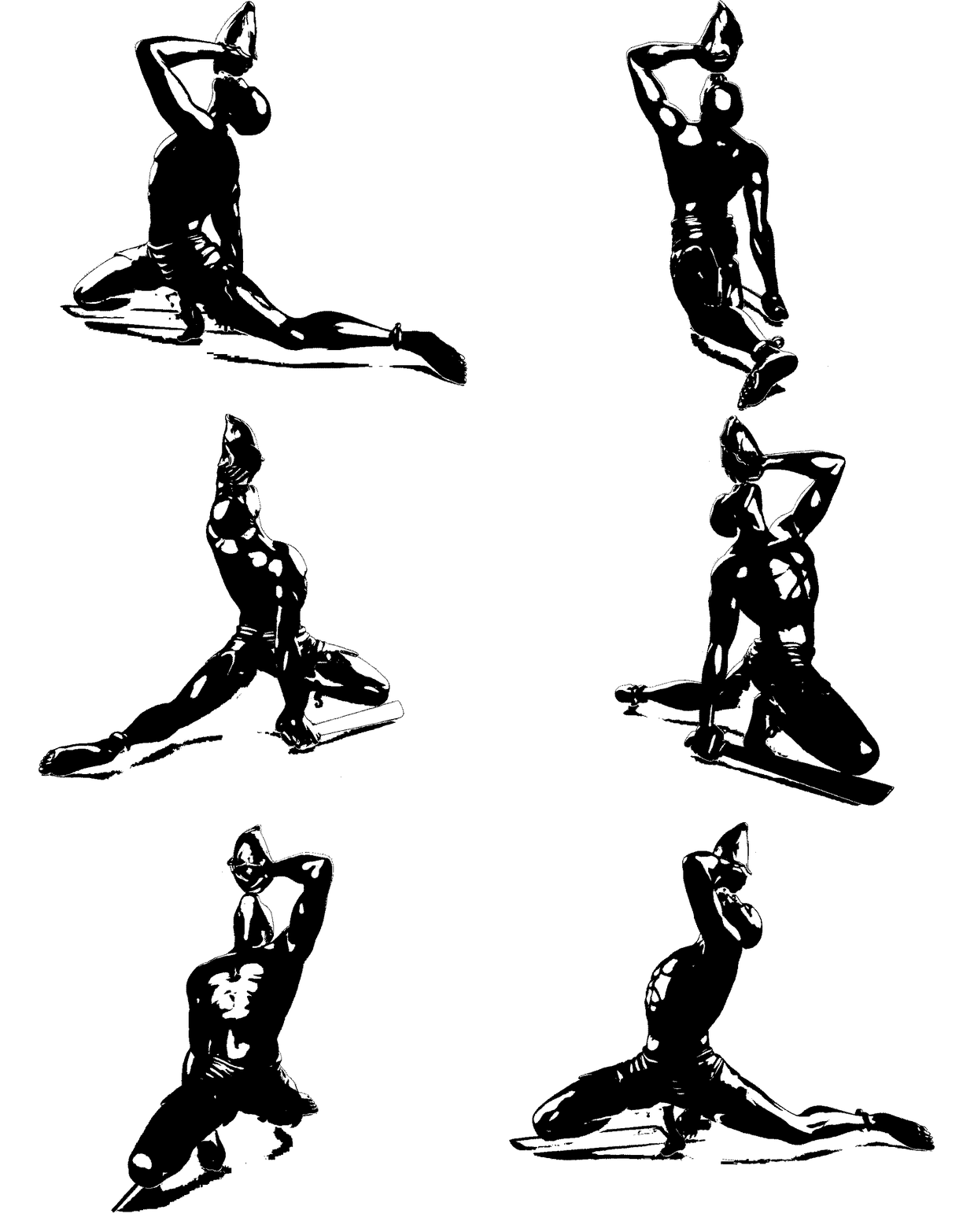
How to Hold Your Clothes
Access and safety are not always within reach.
In learning who you are, you must first question the meanings you’ve been given. You must
embrace repetition in developing new meanings to create the foundational structures that will
hold you.
It’s crucial to find the places where you belong and the people who reflect that belonging back to
you, but first, you must learn to define yourself.
At the start of my journey, I understood home as a physical boundary, yet I did not realize who I
was in it–or who I needed to be outside of the rigid performance that it forced me into.
When I was seven, my grandmother would wake me up to prepare for church. I hated church and
often found the routine overwhelming and lessons contradictory; my curiosity was usually seen
as rebellion and dismissed as rudeness. My lack of obedience was frequently rewarded with
punishment and humiliation. And every Sunday, I prepared myself to beg not to go, and every
Sunday, I was stuffed into a stiff dress that never felt quite right, baby powder on my neck, the
smell of smoked fish on my breath, and long bows tied to my short, coily hair.
At school, home was described as a physical boundary meant to offer protection—a shelter from
the harsh conditions of the outside, a refuge where identity could bloom. Since I had no access to
this home, it became important to reshape its meaning.
I didn’t yet have the language to validate the isolation I felt from everything and everyone. What
I knew was this: I wasn’t myself yet. And in the act of waiting—because wanting was not
allowed—I began to understand the miles and miles between what I was and what I desperately
needed to become. That distance and longing became my earliest definition of home: a place just
out of reach, waiting for me to grow into it.
As I grew, home evolved further. It became an act of reclamation—a space where my deepest
truths demanded sight, where the outrageous could only be seen through vulnerability and
nakedness. My understanding of home shifted from a place of confinement and violence to a
canvas for self-definition. And my body was the perfect place to start. Through this
transformation, I realized that true belonging begins with submitting to being misunderstood,
embracing every intersection identity has to offer, no matter how complex or contradictory. Only
by grounding myself in this understanding could I begin to see myself as a home that was truly
mine.
Reading became my lifeline.
How to Hold Your Clothes
BEVERLIE, How to Hold Your Clothes, 2024, Personal narrative
This essay explores themes of identity, belonging, and cultural reclamation through a personal lens. I reflect on the intersections of queerness, Haitian heritage, and the weight of inherited histories. By delving into the complexities of life on the margins, the essay weaves together personal anecdotes, cultural narratives, and socio-political reflections. Central to the work is Nou Ayiti, a project that serves as a reclamation of both home and self, aiming to empower those who have long been silenced and forgotten. Through this narrative, I challenge the notions of smallness and embrace the expansive universe of the Haitian experience.
In the act of waiting—because wanting was not allowed—I began to understand the miles and miles between what I was and what I desperately needed to become. That distance and longing became my earliest definition of home: a place just out of reach, waiting for me to grow into it.
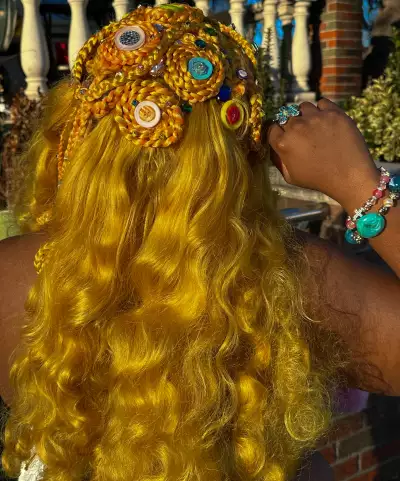
My work is rooted in reclamation—of self, space, and story. I write to explore the intricate intersections of identity, queerness, and the weight of inherited histories. Through personal essays, visual displays, and sculptural projects, I weave the threads of my lived experiences with the broader tapestry of my socio-political identity.
As a Haitian, crafting narratives that reflect the resilience, vulnerability, and beauty of life on the margins is central to my mission. With Nou Ayiti, I can share these stories and show every one of my countrymen, country women, and people that we are not meant to be small, but an entire universe together.
Nou Ayiti is my first step toward returning home.
Beverlie (b. 2001, Croix-des-Bouquets, Haiti; lives in Brooklyn, New York) is a multidisciplinary storyteller whose work spans literature, visual art, and design, creating narratives that investigate identity, memory, and belonging. Beverlie’s dedication to body positivity and creative freedom has earned her collaborations with leading brands such as UGG and Dolls Kill, and a spotlight on Instagram’s official Creators page.